faq:
- question: “How do I get my cat to stop scratching the furniture and use the post instead?” answer: “Start by placing scratching posts directly next to the furniture your cat targets. Use positive reinforcement with treats and praise when they use the post. Make the furniture less appealing with deterrents like double-sided tape or aluminum foil. Be consistent and patient—this process typically takes 2-4 weeks of daily training.”
- question: “What if my cat ignores the scratching post completely?” answer: “Try different materials and orientations. Some cats prefer sisal rope, others like cardboard or carpet. Offer both vertical and horizontal options. Rub catnip on the post to make it more appealing. Play with toys near the post to create positive associations. Sometimes it’s just a matter of finding the right combination that appeals to your individual cat.”
- question: “Should I punish my cat for scratching the furniture?” answer: “No, punishment is rarely effective for scratching behavior and can damage your relationship with your cat. Cats don’t understand punishment after the fact, and physical punishment creates fear and anxiety. Instead, focus on positive reinforcement—reward good behavior and make inappropriate surfaces less appealing. This approach is more effective and builds trust.”
- question: “How long does it take to train a cat to use a scratching post?” answer: “Most cats show significant improvement within 2-4 weeks of consistent training. However, every cat is different. Some may respond quickly within a few days, while others need more time and patience. The key is consistency in your approach and ensuring your cat has appealing scratching options that meet their needs.”
- question: “What type of scratching post is best for furniture-scratching cats?” answer: “Look for sturdy, stable posts that won’t wobble during use. Tall posts (32+ inches) allow for full-body stretching. Consider posts covered in sisal rope, which most cats find appealing. For cats who scratch furniture vertically, choose tall vertical posts. For horizontal scratchers, try floor pads or angled scratchers.”
- question: “Can I train an older cat to use a scratching post?” answer: “Absolutely! Older cats can learn new behaviors just like younger cats. In fact, older cats may be more set in their habits, but they’re also more predictable and consistent. The same training principles apply—provide appealing alternatives, use positive reinforcement, and be patient. It might take a bit longer with an older cat, but success is definitely possible.” howto:
- name: “Identify Target Furniture” text: “Observe which furniture pieces your cat scratches and note the patterns”
- name: “Place Posts Strategically” text: “Position scratching posts within 3 feet of targeted furniture”
- name: “Make Furniture Less Appealing” text: “Use deterrents like double-sided tape or aluminum foil on problem areas”
- name: “Reward Good Behavior” text: “Give treats and praise when your cat uses the scratching post”
- name: “Be Consistent and Patient” text: “Maintain training routine for 2-4 weeks for lasting results” products:
- name: “SmartCat Ultimate Scratching Post” price: “49.99” currency: “USD” url: “https://www.amazon.com/dp/B0006N9I5M?tag=forpetswith07-20" image: images/smartcat-scratching-post.jpg
- name: “PetFusion 3-Sided Vertical Scratcher” price: “34.99” currency: “USD” url: “https://www.amazon.com/dp/B00J4I6J2I?tag=forpetswith07-20" image: images/petfusion-scratcher.jpg
- name: “Sticky Paws Furniture Strips” price: “12.99” currency: “USD” url: “https://www.amazon.com/dp/B0006N9I5M?tag=forpetswith07-20" image: images/sticky-paws-strips.jpg
How to Transition Cat from Furniture to Scratching Post
There’s nothing quite like the sound of your favorite armchair being systematically destroyed by your cat’s claws. You’ve tried everything—shouting, spraying water, even that expensive scratching post that sits ignored in the corner. Yet somehow, your cat still prefers your furniture to any designated scratching surface you provide.
This frustrating scenario plays out in countless households, but it doesn’t have to be your reality. Transitioning your cat from furniture to scratching posts isn’t about forcing them to change their nature—it’s about understanding their instincts and providing better alternatives that meet their needs.
Let’s walk through a proven, step-by-step approach to redirecting your cat’s scratching behavior and saving your furniture in the process.
Understanding the challenge
Why cats choose furniture
Before you can successfully redirect your cat’s scratching, you need to understand why they choose furniture in the first place. It’s not because they’re being malicious or trying to destroy your belongings on purpose. Furniture scratching serves several important purposes in your cat’s life.
Furniture often provides the perfect combination of texture, stability, and location that cats seek. The fabric offers good resistance for satisfying scratches, the piece is stable and won’t wobble during use, and it’s located in areas where your cat spends time and wants to mark their territory. From your cat’s perspective, your furniture is simply an excellent scratching surface.
The instinct behind scratching
Scratching is a natural, necessary behavior for cats. It serves multiple functions:
- Territory marking through both visual marks and scent from paw glands
- Muscle stretching and exercise, especially after sleeping
- Nail maintenance by removing dead outer sheaths
- Stress relief and emotional regulation
When you try to stop scratching entirely, you’re working against your cat’s basic instincts. The goal isn’t to prevent scratching but to redirect it to appropriate surfaces. This distinction is crucial for successful training.
Why punishment doesn’t work
Many cat owners resort to punishment when furniture scratching becomes a problem. They might shout, spray water, or use other deterrents hoping to stop the behavior. Unfortunately, punishment rarely works for scratching and often makes things worse.
Cats don’t understand punishment after the fact. If you scold your cat for scratching the couch an hour after it happened, they won’t connect the punishment to the behavior. Instead, they’ll associate you with negative experiences and may become anxious or fearful.
Punishment can also increase stress, which often leads to more scratching as a coping mechanism. You end up in a cycle where punishment causes more scratching, which leads to more punishment, and so on. Breaking this cycle requires a completely different approach.
Step 1: Assessment and preparation
Identify problem areas
Start by carefully observing your cat’s scratching behavior. Which pieces of furniture do they target? When do they scratch—morning, evening, after meals? What type of scratching do they prefer—vertical, horizontal, or angled?
This information is crucial for developing an effective training strategy. A cat who scratches the side of the sofa vertically needs different solutions than one who scratches the carpet horizontally. Understanding the specifics helps you provide targeted alternatives.
Choose appropriate scratching surfaces
Based on your observations, select scratching surfaces that match your cat’s preferences. If they scratch vertically on furniture, choose tall, sturdy scratching posts. If they scratch horizontally, try floor pads or cardboard scratchers. If they like angled surfaces, look for angled scratchers or ramps.
Consider the material too. Most cats prefer sisal rope, but some like cardboard, carpet, or rough fabric. You might need to experiment with different materials to find what appeals to your individual cat.
Place posts strategically
Location is everything when it comes to scratching post placement. The most effective strategy is to place scratching posts within 3 feet of the furniture your cat currently targets. This proximity makes the transition from furniture to post natural and convenient.
Don’t hide posts in corners or unused rooms. Place them in high-traffic areas where your cat spends time. The goal is to make the appropriate surface more accessible and appealing than the furniture.
Prepare your furniture
While training your cat to use scratching posts, you can make the furniture less appealing in problem areas. Use deterrents like double-sided tape, aluminum foil, or commercial furniture protectors on the spots your cat targets.
These deterrents aren’t permanent solutions, but they can help break the scratching habit while you’re training your cat to use better alternatives. Once your cat is consistently using appropriate surfaces, you can gradually remove the deterrents.
Step 2: Making the scratching post appealing
Add incentives and attractions
Make the scratching post irresistible to your cat. Rub catnip on the surface to create interest. Hang toys from the post or place treats nearby to encourage exploration. Play with your cat near the post using wand toys to create positive associations.
Some cats respond well to pheromone products like Feliway, which can make new environments feel more familiar and safe. Spray these around the scratching post to help your cat feel comfortable using it.
Ensure stability and comfort
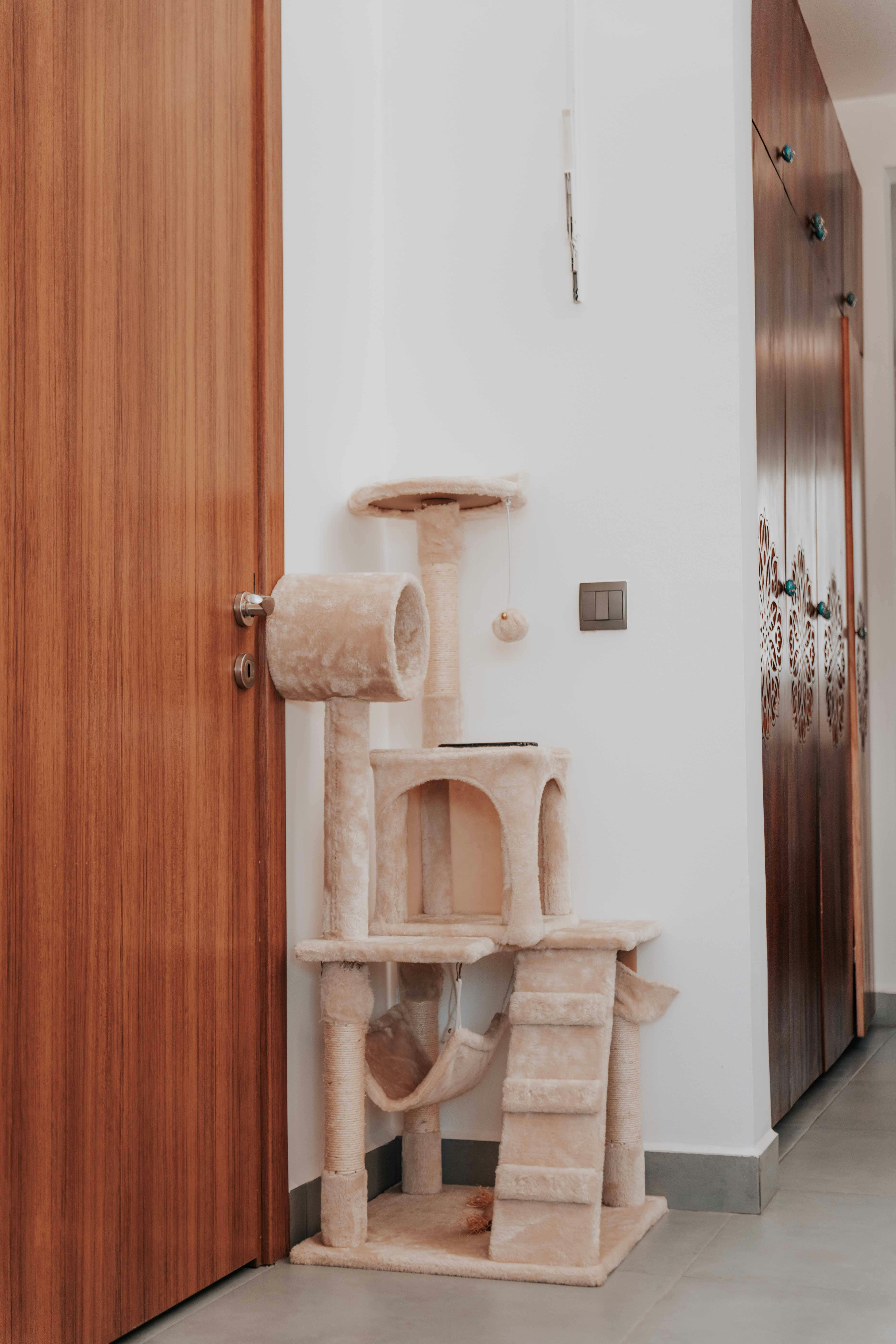
Check that your scratching post is completely stable. It shouldn’t wobble or tip when your cat uses it enthusiastically. If necessary, add weight to the base or secure it to the wall for extra stability.
The post should also be tall enough for your cat to fully stretch when scratching. Most cats need posts at least 32 inches tall for proper stretching. Short posts might not meet their physical needs and will be ignored.
Create positive associations
Every time your cat shows interest in the scratching post, reward them with treats, praise, or play. This positive reinforcement helps them associate the post with good experiences.
Be consistent with this reinforcement. Every interaction with the post should be positive. Over time, your cat will learn that the scratching post is a source of pleasure and rewards, while the furniture doesn’t offer the same benefits.
Step 3: Active training and redirection
Catch them in the act
When you see your cat approaching furniture to scratch, gently redirect them to the scratching post. Pick them up and place them near the post, or use toys to lure them away from the furniture and toward the appropriate surface.
The key is to redirect in the moment, not after the scratching has already happened. Immediate redirection helps your cat make the connection between the urge to scratch and the appropriate surface.
Use positive reinforcement immediately
As soon as your cat uses the scratching post, reward them enthusiastically. Give treats, offer praise, or engage in play. The reward should come immediately so they connect it with the scratching behavior.
This positive reinforcement is the most powerful training tool you have. It’s much more effective than punishment and builds a positive relationship between you and your cat.
Be consistent and patient
Consistency is crucial for successful training. Everyone in your household should follow the same approach—redirecting to the post and rewarding good behavior. Mixed messages will confuse your cat and slow progress.
Be patient with the process. This isn’t an overnight fix. Most cats need 2-4 weeks of consistent training to reliably use scratching posts instead of furniture. Some cats may respond more quickly, while others need more time. Stay consistent and trust the process.
Step 4: Troubleshooting common challenges
What if they ignore the post completely
If your cat shows no interest in the scratching post despite your best efforts, try these adjustments:
- Move the post to a different location—sometimes a few feet makes a big difference
- Try a different material—sisal, cardboard, carpet, or rough fabric
- Change the orientation—vertical, horizontal, or angled
- Add more incentives—catnip, toys, treats
- Check for stability—wobbling posts scare cats away
Sometimes it’s just a matter of finding the right combination that appeals to your individual cat. Don’t be afraid to experiment until you find what works.
What if they scratch both the post and furniture
It’s common for cats to continue some furniture scratching even as they start using the post. This is normal during the transition period. Continue redirecting and reinforcing post use while making furniture less appealing.
Gradually increase the deterrents on furniture and decrease them as your cat uses the post more consistently. Over time, the post should become their preferred scratching surface.
What if the behavior gets worse before it gets better
Sometimes cats initially scratch more when you start training. This can happen because they’re testing boundaries or responding to changes in their environment. Stay consistent with your approach and don’t give up.
If the behavior significantly worsens or your cat seems stressed, take a step back and reduce the pressure. Focus on positive reinforcement and make the environment more comfortable. Sometimes a gentler approach works better.
Step 5: Long-term success and maintenance
Gradually remove deterrents
Once your cat is consistently using the scratching post and ignoring the furniture, you can gradually remove the deterrents from your furniture. Start with the least problematic areas and work your way to the most challenging spots.
Remove deterrents slowly over several weeks. If your cat returns to scratching a particular area, replace the deterrent and continue training for a bit longer before trying again.
Provide ongoing reinforcement
Even after your cat is reliably using the scratching post, continue to provide occasional positive reinforcement. Give treats for post use, offer praise, and maintain the positive associations you’ve built.
This ongoing reinforcement helps maintain the behavior and prevents regression. It also keeps the scratching post as an appealing option in your cat’s mind.
Maintain and replace scratching surfaces
Scratching posts wear out over time. Check them regularly for signs of wear and replace them when they become too smooth or damaged. A worn-out post won’t appeal to your cat and might lead to a return to furniture scratching.
Keep posts clean and free of debris. Some cats are particular about cleanliness and might avoid dirty scratching areas.
Expand scratching options
Once your cat is successfully using one scratching post, consider adding more throughout your home. Multiple posts in different locations give your cat options and reduce the likelihood of furniture scratching.
Follow the general rule of one post per room, plus extras for multi-cat households. More options mean more opportunities for appropriate scratching.
Special considerations for different situations
Multi-cat households
In homes with multiple cats, competition for scratching surfaces can lead to furniture scratching. Provide enough posts so each cat has their own options. The general rule is number of cats plus one posts minimum.
Place posts in different locations to prevent resource guarding. Some cats prefer private scratching spots away from others, while some are more social. Observe your cats’ preferences and provide accordingly.
Kittens and young cats
Kittens are still learning appropriate scratching behavior. Start training early by providing appealing scratching surfaces and redirecting them when they scratch inappropriately. Young cats are often more adaptable and may learn more quickly than older cats.
Be patient with kittens—they have lots of energy and may scratch more frequently. Provide plenty of play opportunities and environmental enrichment to help channel their energy appropriately.
Senior cats
Older cats may have different scratching needs due to arthritis or other age-related changes. They might prefer lower, more accessible scratching surfaces or softer materials that are easier on their joints.
Provide options that accommodate your senior cat’s physical limitations. They may scratch less frequently than younger cats but still need appropriate surfaces for their comfort and nail maintenance.
Building a lasting solution
Transitioning your cat from furniture to scratching posts is a process that requires patience, consistency, and understanding. It’s not about forcing your cat to change but about providing better alternatives that meet their needs.
Remember that scratching is a natural, necessary behavior. Your cat isn’t trying to be destructive—they’re following instincts that serve important purposes in their life. By working with these instincts rather than against them, you can achieve lasting success.
Focus on positive reinforcement, provide appealing alternatives, and be patient with the process. With time and consistency, you can have both beautiful furniture and a happy, well-scratched cat.
The effort you put into this training will pay off in a better relationship with your cat and a home that’s safe from destructive scratching. Stay committed to the process, celebrate small victories, and trust that your cat can learn new habits.
Affiliate Disclosure: When you buy through links on our site, we may earn a commission at no extra cost to you. This helps us continue providing free, high-quality pet care content.
Medical Disclaimer: Always consult with a veterinarian for medical advice. This article is for informational purposes only.