Best Scratching Posts for Large Cats (2026)
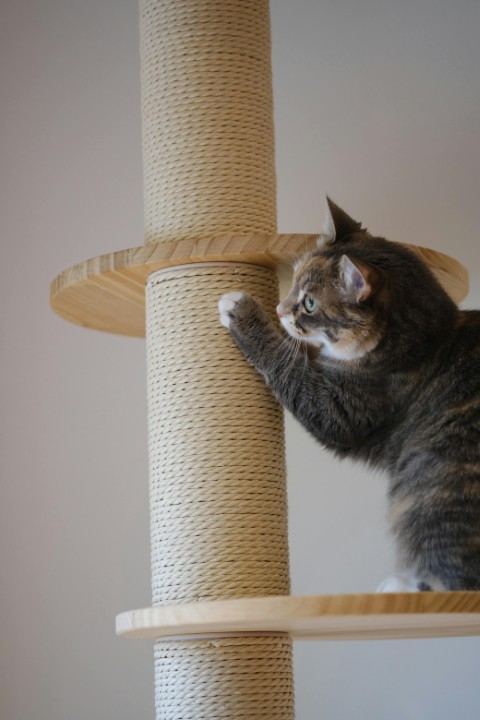
Best Scratching Posts for Large Cats (2026)
Large cats—Maine Coons, Ragdolls, Norwegian Forest Cats, and other big breeds—require scratching posts with significant stability and durability. Standard posts designed for smaller cats often topple under larger cats’ weight and force, frustrating attempts to satisfy natural scratching instincts and often becoming abandoned entirely. A proper scratching post for large cats must withstand powerful scratching sessions while providing appealing texture and appropriate height.
Large cat scratching posts need reinforced construction, wider and heavier bases to prevent tipping, taller posts for full-body stretching, and durable materials that withstand intense use. In this guide, we’ve compiled the best options designed specifically for large and giant-breed cats, prioritizing stability, durability, and appropriate sizing.
Quick Comparison
| Product | Type | Best For | Rating | Link |
|---|---|---|---|---|
| Extra Tall Floor-to-Ceiling Post | Floor-to-Ceiling | Maximum stability, vertical stretching | ⭐⭐⭐⭐⭐ | View on Amazon |
| Heavy-Duty Base Post | Base-Heavy | Large breed cats, stability focus | ⭐⭐⭐⭐⭐ | View on Amazon |
| Double-Sided Scratching Post | Double-Sided | Multiple scratching surfaces, space-saving | ⭐⭐⭐⭐ | View on Amazon |
| Tower Tree with Scratch Posts | Tower | Multi-level cat tree with scratching posts | ⭐⭐⭐⭐⭐ | View on Amazon |
| Carpeted Cat Post | Carpeted | Cats who prefer carpet texture, durability | ⭐⭐⭐⭐ | View on Amazon |
| Corner Scratching Post | Corner | Space-efficient, room placement flexibility | ⭐⭐⭐⭐⭐ | View on Amazon |
| Horizontal Scratcher Pad | Horizontal | Cats who prefer horizontal scratching | ⭐⭐⭐⭐ | View on Amazon |
Top 7 Scratching Posts for Large Cats
1. Extra Tall Floor-to-Ceiling Post
Why it’s great: This post uses tension against ceiling and floor to create exceptionally stable scratching surfaces that cannot tip under large cat’s force. With heights up to 8-10 feet or more, these posts accommodate large cats’ need for full-body vertical stretching. The tension-adjustable mechanism fits various ceiling heights, making it versatile across different rooms. Large cats can lean into scratching vigorously without any wobble or tipping concerns.
Best for: Very large cats, apartments with high ceilings, maximum stability needs.
Key Features:
- Floor-to-ceiling tension design
- Adjustable height mechanism
- Tall posts (up to 8-10 feet)
- Multiple post diameters
- Various material options (sisal, carpet)
- Extremely stable design
Pros:
- Virtually tip-proof
- Accommodates vertical stretching needs
- Tall enough for full-body reach
- Adjustable for various ceiling heights
- Extremely stable for vigorous scratching
- Good for large breeds and heavy cats
Cons:
- More expensive than standard posts
- Requires ceiling height availability
- Installation required (tension adjustment)
- Some cats dislike the floor-to-ceiling design
- Harder to relocate once installed
- Larger footprint (takes more space)
2. Heavy-Duty Base Post
Why it’s great: Not every room can accommodate floor-to-ceiling designs. These posts compensate with wider, heavier bases that provide exceptional stability despite freestanding design. The base is significantly larger and heavier than standard posts, preventing tipping under large cat force. Heights typically range from 30-48 inches, adequate for most large cats to stretch vertically. Often includes multiple post diameters for variety.
Best for: Large breed cats where floor-to-ceiling not possible, multi-cat households.
Key Features:
- Extra-wide heavy base
- Freestanding design
- Tall post heights (30-48 inches)
- Multiple post diameters
- Various wrapping materials (sisal, carpet)
- Reinforced construction
Pros:
- Excellent stability without requiring ceiling
- Provides adequate height for large cats
- Can be easily repositioned/moved
- Available in various heights/styles
- Strong, durable construction
- Good for multi-cat households
Cons:
- Not as stable as floor-to-ceiling
- Larger base takes up more floor space
- Height may still be short for very tall cats
- More expensive than standard posts
- Base makes repositioning heavier
- Some large breeds may still tip it rarely
3. Double-Sided Scratching Post
Why it’s great: Large cats often appreciate multiple scratching surfaces, and double-sided posts provide exactly that—two scratching surfaces on either side of the central support. This doubles the scratching area, allows multiple cats to scratch simultaneously, and gives cats choice of position. The central support provides stability, while the dual sides maximize the utility of a single base footprint.
Best for: Multi-cat households, cats who like choice, efficient use of floor space.
Key Features:
- Two scratching surfaces on central post
- Multiple cat simultaneous use
- Efficient space usage
- Various height options
- Different wrapping options (sisal, carpet)
- Stable central support design
Pros:
- Doubles scratching area without taking more space
- Allows multiple cats to scratch
- Provides choice and variety
- Good for multi-cat households
- Space-efficient design
- Cats can choose preferred side
Cons:
- Not suitable for very aggressive scratchers (support splits force)
- Some cats prefer single-sided posts
- Assembly may be more complex
- Still needs heavy base for large cats
- May not accommodate extreme scratching force
- Slightly more expensive than single-sided
4. Tower Tree with Scratch Posts
Why it’s great: Large cats need both scratching surfaces and climbing opportunities. These tower trees combine multiple levels, platforms, and scratching posts into one comprehensive unit. The structure provides multiple scratching posts of various orientations and heights, plus climbing surfaces and lounging areas. The combined weight of multiple posts and platforms provides excellent stability, and the multi-zone design keeps cats engaged and satisfied.
Best for: Households with limited separate scratching options, multi-cat households, maximum utility.
Key Features:
- Multi-level tower design
- Multiple scratching posts
- Horizontal/vertical scratching surfaces
- Climbing areas and platforms
- Heavy, stable construction
- Various configurations available
Pros:
- Comprehensive solution (scratching + climbing + lounging)
- Multiple scratching surfaces and orientations
- Excellent stability from combined weight
- Multiple cats can use simultaneously
- Reduces need for separate posts
- High engagement and satisfaction
Cons:
- Larger footprint (takes significant space)
- More expensive than individual posts
- Complex assembly required
- Harder to relocate once assembled
- Some cats won’t use all features
- May exceed space constraints
5. Carpeted Cat Post
Why it’s great: Some large cats prefer carpet texture over sisal rope—they find it familiar (resembles carpet in homes) and satisfying to scratch. These posts feature heavy carpeted scratching surfaces wrapped around robust posts with reinforced bases. Carpet provides excellent traction and resistance, and many cats prefer its texture over rougher sisal. Durability is excellent with proper installation, though carpet can be replaced when worn.
Best for: Cats who prefer carpet, durability-focused households, specific texture preferences.
Key Features:
- Heavy-duty carpeting
- Reinforced stitching and base
- Various heights available
- Carpet texture cats find appealing
- Durable, long-lasting
- Can have scratch-resistant backing
Pros:
- Cats often prefer carpet texture
- Excellent traction and scratch resistance
- Durable with reinforced construction
- Familiar texture (like home carpet)
- Can be replaced when worn
- Good for cats who reject sisal
Cons:
- Carpet can eventually loosen
- Sheds fibers (cleaning required)
- May need periodic tightening/replacement
- Carpet variety less than sisal
- More expensive than standard sisal posts
- Texture may pull/damage more than sisal
6. Corner Scratching Post
Why it’s great: Corner posts maximize limited space by fitting neatly into room corners, providing stable scratching surfaces without sacrificing valuable floor space. The design utilizes room corners for stability, allowing for taller, more stable posts than freestanding models of similar base size. Perfect for apartments or rooms where space is Premium. Corner placement also often suits large cats’ preference for scratching in protected areas.
Best for: Apartment living, space-constrained rooms, efficient placement.
Key Features:
- Corner-fitting design
- Utilizes room stability
- Space-efficient placement
- Often taller than comparable freestanding posts
- Various wrapping materials
- Minimal footprint
Pros:
- Excellent use of limited space
- Stable corner positioning
- Provides height while conserving floor area
- Often accommodates tall posts
- Less obtrusive than freestanding
- Corner placement cats often find appealing
Cons:
- Limited to corner placement (relocation challenges)
- Can be difficult to position in rooms without good corners
- Assembly and positioning can be finicky
- May not be as tall as floor-to-ceiling
- Some designs have limited base stability
- Must align with room corner angle properly
7. Horizontal Scratcher Pad
Why it’s great: While many posts are vertical, some large cats prefer horizontal scratching—stretching out while scratching. These pads provide large horizontal scratching surfaces at ground level where large cats can stretch fully. The base design accommodates cat weight without tipping, and the surface area is substantial for full-body scratching. Good for cats who prefer horizontal over vertical options.
Best for: Cats who prefer horizontal scratching, large cats who dislike vertical posts.
Key Features:
- Large horizontal surface
- Ground-level placement
- Wide base for stability
- Various materials (corrugated cardboard, rope, carpet)
- Large contact area
- Full-body stretching capability
Pros:
- Accommodates horizontal scratching preference
- Allows full-body stretching horizontally
- Typically very stable (ground contact)
- Good for cats who dislike vertical posts
- Large surface area for scratching
- Often less expensive than tall posts
Cons:
- Takes up more floor space (spread out)
- Doesn’t provide vertical stretching
- Some owners find horizontal scratching less appealing aesthetically
- May require more frequent replacement (wear pattern)
- Doesn’t satisfy vertical scratching instinct
- Less ideal for cats needing vertical stretching
What to Look for in Scratching Posts for Large Cats
Stability and Tipping Resistance
The single most important consideration for large cats is stability—the post must NEVER tip under vigorous scratching. Wider bases, heavier construction, floor-to-ceiling designs, or corner placement prevent tipping. Test stability by applying force similar to your cat’s scratching intensity. Reinforced bases, weighted bottom plates, or tension mechanisms significantly improve stability. Never compromise on stability for aesthetics—large cats will abandon unstable posts.
Height and Post Diameter
Large cats need tall posts to accommodate vertical stretching—aim for posts at least 36 inches tall, better 48+ inches for very large breeds. The post should reach to at least your cat’s shoulder height when standing on hind legs. Post diameter matters too—too narrow and large cats can’t grip effectively; too wide and the post is unwieldy. Post diameters of 4-6 inches accommodate most large breeds well.
Material and Wrapping Quality
Common wrapping materials include sisal rope and carpet. Sisal provides excellent scratch resistance and durability but some cats dislike its texture. Carpet offers familiarity and cats often prefer its texture, but sheds fibers and can eventually loosen. Quality wrapping with tight, secure attachment prevents unraveling. For large cats, premium materials are more critical—their force and claws will stress materials significantly.
Base Construction and Weight Stability
The base must be significantly wider and heavier than standard posts. Look for bases at least 24 inches wide (ideally wider for very large breeds), weighted or bottom-heavy construction, and solid construction (no hollow or flimsy basing). Rubberized or grippy bottom surfaces prevent sliding on smooth floors. The base material impacts weight and stability—solid materials provide better resistance.
Multiple Cat Household Considerations
Multi-cat households with large cats require more robust posts—multiple cats may use the same post, increasing load and wear. Look for reinforced construction, wider bases, multiple posts in a single unit, or multiple separate posts. Having at least one post per cat (plus extras) ensures all cats have access and prevents territorial struggles over limited scratching surfaces.
Space Requirements and Placement
Consider the footprint and room placement needed. Large posts require significant space—both base area and vertical height clearance. Floor-to-ceiling designs need suitable ceiling height and clearance. Corner posts require available corners with appropriate angles. Placement matters too—posts should be placed near rest areas, not isolated in unused corners, or cats will ignore them.
FAQ
Q: How tall should a scratching post be for a large cat?
A: For large breeds, posts should ideally reach at least the cat’s shoulder height when standing on hind legs—typically 36-48 inches tall. Maine Coons, Ragdolls, Norwegian Forest Cats, and similar large breeds benefit from taller posts (48+ inches) to accommodate full-body vertical stretching. Posts should be tall enough for the cat to extend fully while scratching, engaging back muscles and stretching the spine.
Q: Do large cats prefer sisal rope or carpet for scratching?
A: Preference varies significantly between individual cats. Many large breeds initially prefer carpet texture (familiar, softer), while others find sisal more satisfying due to rough texture that catches claws. Offer both options initially to identify preference. If your cat rejects one type, try the other. Some cats prefer alternating between vertical and horizontal scratching surfaces.
Q: Can I make my own scratching post for large cats?
A: Yes, but must prioritize stability and durability. Use sturdy materials (solid wood post, heavy wide base), reinforce the base significantly (weighted, bottom-heavy), and ensure secure attachment of wrapping materials. For large cats, homemade posts must match or exceed commercial stability—tipping risks cause cats to abandon the post. Consider starting with commercially stable posts and adding homemade surfaces rather than from-scratch construction unless experienced.
Q: How can I encourage my large cat to use a scratching post instead of furniture?
A: Place posts near furniture (cats prefer scratching near rest areas), make posts more appealing than furniture (add catnip, attractive textures), make furniture less appealing (sticky tape, citrus scents), reward and praise when cat uses posts, initially place post where cat scratches furniture, maintain multiple posts (especially important for large cats with more territory), and replace damaged posts promptly (worn posts become unappealing).
Q: Do large cat breeds need multiple scratching posts?
A: Yes, ideally. Large breeds have more territory and scratching needs. At minimum, provide one post per cat plus one extra to accommodate preferences and prevent territorial conflicts. Having options in different areas of the home (near sleeping areas, near windows, in main rooms) encourages use. Post variety (vertical, horizontal, different textures) prevents boredom and accommodates different scratching preferences.
Final Thoughts
Large cats require scratching posts specifically designed to withstand their size, weight, and force. Prioritize absolute stability—tipping is the single factor most likely to cause large cats to abandon scratching posts. Choose appropriate height for full-body stretching, durable materials that withstand intense scratching, and consider multi-cat household needs. Multiple posts and varied placements encourage consistent use and protect your furniture from unwanted scratching damage.
Want expert pet care advice? Get our comprehensive guide: Pet Care Made Simple
When you buy through links on our site, we may earn a commission at no extra cost to you. This helps us continue providing free pet care content.