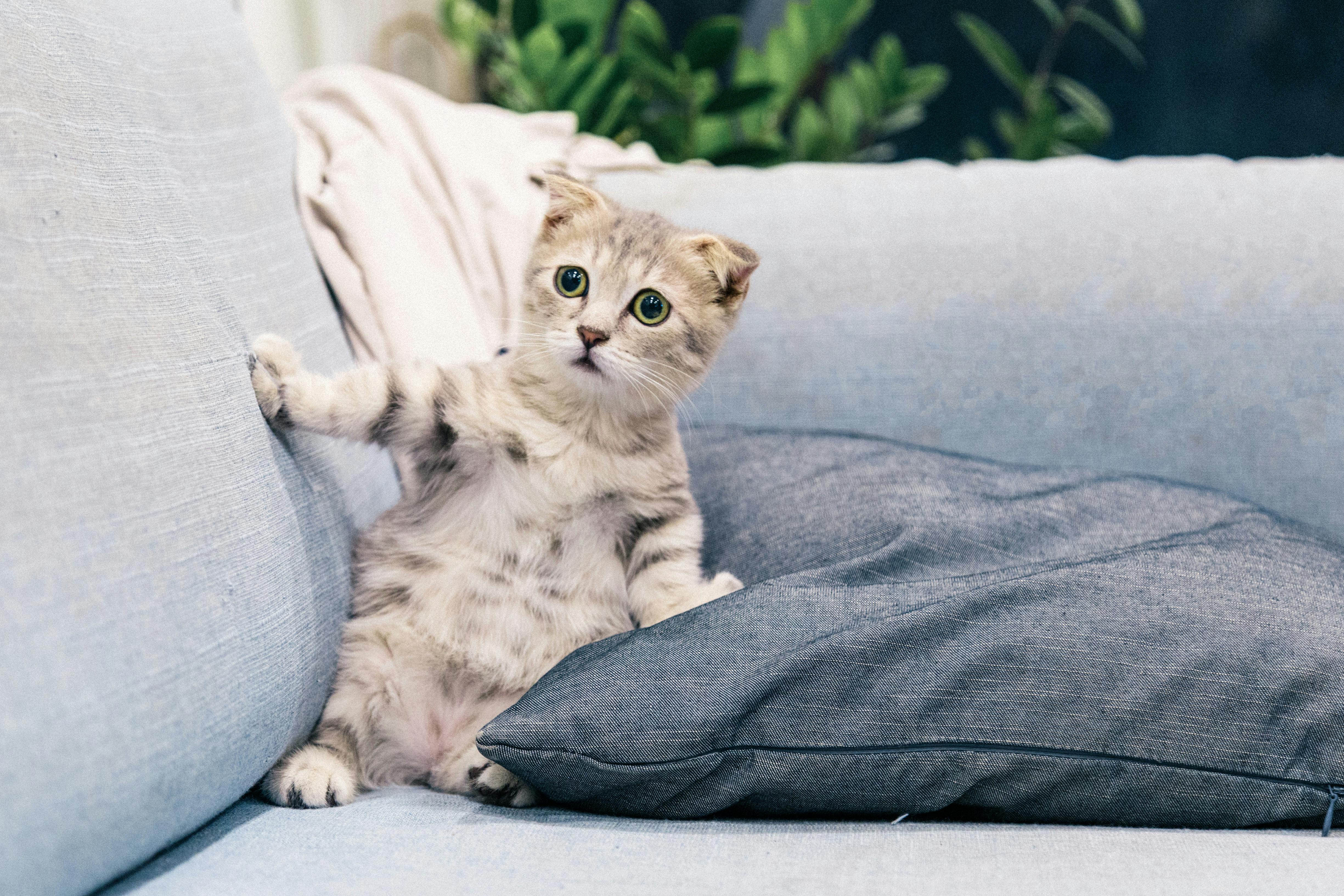
Let’s be real: cats and furniture don’t always mix, but there’s a way through it.
Cat Litter Box Problems and Solutions - Complete Guide
Is your cat avoiding the litter box? Litter box problems are frustrating but solvable. Understanding why your cat is avoiding the box is the first step to finding a solution.
Common Litter Box Problems
Problem 1: Avoiding the Litter Box
Signs:
- Urinating/defecating outside the box
- Going near but not in the box
- Using the box inconsistently
- Eliminating in specific locations
Possible Causes:
- Dirty litter box
- Wrong litter type
- Box size issues
- Location problems
- Medical issues
- Stress or anxiety
Problem 2: Spraying and Marking
Signs:
- Vertical spraying on walls
- Marking territory
- Unneutered male behavior
- Multiple cat conflicts
Possible Causes:
- Territorial behavior
- Stress
- Unneutered status
- New pets or people
- Environmental changes
Problem 3: Going Outside the Box
Signs:
- Consistent location preference
- Specific surface preference
- Timing patterns
- Age-related changes
Possible Causes:
- Medical issues
- Litter preference
- Box accessibility
- Cognitive decline (senior cats)
- Behavioral issues
Medical Issues First
Rule Out Health Problems
Common Medical Causes:
- Urinary tract infections - Painful urination
- Kidney disease - Increased frequency
- Diabetes - Excessive urination
- Bladder stones - Discomfort
- Arthritis - Difficulty getting in/out
When to See a Vet:
- Sudden changes in litter box habits
- Blood in urine
- Straining to urinate
- Increased frequency
- Licking genital area excessively
Diagnostic Tests:
- Urinalysis
- Blood work
- Physical exam
- X-rays or ultrasound
- Urine culture
Litter Box Setup Solutions
Box Size and Type
Right Size Matters:
- Length: 1.5x cat’s body length
- Width: Cat can turn around comfortably
- Height: Low enough for easy entry (especially for seniors)
- Open vs. covered: Most cats prefer open
Box Options:
- Standard litter box - Basic, affordable
- High-sided box - Contains mess better
- Top-entry box - Reduces tracking
- Self-cleaning box - Convenience (some cats dislike)
- Extra-large box - For larger cats or multi-cat homes
Litter Type Selection
Popular Litter Types:
Clay Litter
- Pros: Affordable, good absorption
- Cons: Dusty, heavy, environmental concerns
- Best for: Budget-conscious owners
Clumping Litter
- Pros: Easy cleaning, good odor control
- Cons: Can be dusty, some cats dislike texture
- Best for: Most cats and owners
Crystal/Silica Litter
- Pros: Excellent odor control, low dust
- Cons: Expensive, some cats dislike texture
- Best for: Odor-sensitive homes
Natural/Biodegradable
- Pros: Eco-friendly, low dust
- Cons: More expensive, less clumping
- Best for: Environmentally conscious owners
Paper Litter
- Pros: Dust-free, soft on paws
- Cons: Poor odor control, frequent changes needed
- Best for: Cats with respiratory issues
Litter Depth
Ideal Depth:
- Standard: 2-3 inches deep
- Clumping litter: 3-4 inches
- Non-clumping: 2-3 inches
- Senior cats: Slightly shallower for easy access
Too Deep Problems:
- Difficult to dig
- Uncomfortable for some cats
- Wastes litter
Too Shallow Problems:
- Can’t cover waste
- Odor issues
- Messy paws
Placement Strategy
Ideal Locations
Good Spots:
- Quiet area - Away from high traffic
- Accessible - Easy to reach day and night
- Private - Some cats prefer seclusion
- Multiple levels - One per floor in multi-story homes
Bad Spots:
- Near food/water - Cats don’t eat near bathroom
- High traffic - Causes stress
- Noisy areas - Laundry room, near appliances
- Hard to reach - Basements, attics
- Confined spaces - Closets, small bathrooms
Number of Boxes
The Golden Rule:
- One box per cat + one extra
- Example: 2 cats = 3 boxes
- Example: 3 cats = 4 boxes
Why Multiple Boxes?
- Prevents territorial issues
- Provides options
- Reduces competition
- Accommodates preferences
Cleaning and Maintenance
Daily Cleaning
Scoop Daily:
- Remove solid waste
- Check for clumps
- Stir litter if needed
- Add fresh litter if low
Benefits:
- Reduces odor
- Keeps cat interested
- Prevents avoidance
- Maintains hygiene
Weekly Maintenance
Deep Clean:
- Empty entire box
- Wash with mild soap
- Rinse thoroughly
- Dry completely
- Refill with fresh litter
Frequency:
- Clumping litter: Every 2-3 weeks
- Non-clumping: Weekly
- Multiple cats: More frequent
Monthly Tasks
Replace Litter:
- Completely change litter
- Scrub box thoroughly
- Inspect for wear
- Replace if damaged
Check Box Condition:
- Cracks or scratches
- Odor absorption
- Structural integrity
- Size appropriateness
Behavioral Solutions
Stress Reduction
Identify Stressors:
- New pets or people
- Moving or renovations
- Schedule changes
- Outdoor cats visible
- Loud noises
Reduce Stress:
- Feliway diffusers - Calming pheromones
- Consistent routine - Predictable schedule
- Safe spaces - Hiding spots
- Vertical space - Cat trees, shelves
- Play therapy - Reduce anxiety
Positive Reinforcement
Reward Good Behavior:
- Praise when using box
- Treats after successful use
- Positive attention
- No punishment for accidents
Training Tips:
- Be patient
- Stay consistent
- Use positive voice
- Reward immediately
Litter Box Training
For Kittens:
- Start young (8 weeks)
- Easy access (low sides)
- Frequent reminders
- Positive reinforcement
For Adult Cats:
- Reintroduce box
- Make it appealing
- Remove obstacles
- Be patient
Multi-Cat Household Solutions
Preventing Conflict
Strategies:
- Multiple boxes - One per cat plus one
- Spread locations - Different areas
- Different types - Variety of options
- Individual preferences - Respect each cat
Signs of Conflict:
- Guarding boxes
- Ambushing at boxes
- Eliminating outside boxes
- Fighting near boxes
Solutions
Increase Resources:
- Add more boxes
- Separate locations
- Different litter types
- More cleaning frequency
Reduce Competition:
- Spay/neuter all cats
- Provide vertical space
- Separate feeding areas
- Individual attention
Senior Cat Considerations
Age-Related Issues
Common Problems:
- Arthritis - Difficulty getting in/out
- Cognitive decline - Forgetting box location
- Incontinence - Unable to hold it
- Vision loss - Can’t find box
Solutions:
- Lower sides - Easy entry
- Larger opening - More access
- More boxes - Easier to find
- Night lights - Better visibility
- Ramps or steps - Easier access
- More frequent cleaning - Better hygiene
Quick Reference Guide
| Problem | Solution |
|---|---|
| Avoiding box | Check medical issues first |
| Spraying | Neuter/spay, reduce stress |
| Going outside | More boxes, better location |
| Dirty box | Scoop daily, clean weekly |
| Wrong litter | Try different types |
| Box too small | Get larger box |
Common Mistakes to Avoid
Don’t Do This
- Punish accidents - Creates fear and anxiety
- Use scented litter - Many cats dislike strong smells
- Clean with strong chemicals - Cats are sensitive to odors
- Move box frequently - Confuses cats
- Not enough boxes - Causes competition
Do This Instead
- Clean regularly - Daily scooping
- Provide options - Multiple boxes and litter types
- Be patient - Behavior change takes time
- Rule out medical issues - Always first step
- Stay consistent - Routine matters
When to Call a Professional
Signs You Need Help:
- Medical issues persist
- Behavioral problems continue
- Multi-cat conflicts
- Senior cat complications
- You’re unsure about solutions
Professional Options:
- Veterinarian
- Cat behaviorist
- Animal behavior consultant
- Feline specialist
Success Stories
Case Study 1: Senior Cat Solution
- Problem: Arthritis made box difficult
- Solution: Lower-sided box, ramp access
- Result: Cat using box consistently again
Case Study 2: Multi-Cat Harmony
- Problem: 3 cats fighting over 2 boxes
- Solution: Added 2 more boxes, spread locations
- Result: All cats using boxes peacefully
Case Study 3: Stress-Related Avoidance
- Problem: Cat avoiding box after move
- Solution: Feliway, consistent routine, extra box
- Result: Normal litter box habits restored
Final Tips
- Always rule out medical issues first - This is crucial
- Clean daily - Most common cause of problems
- Provide multiple options - Cats have preferences
- Be patient - Solutions take time
- Stay positive - Your cat can sense your frustration
Need more cat behavior tips? Check out our guide: Cat Hairball Remedies That Actually Work